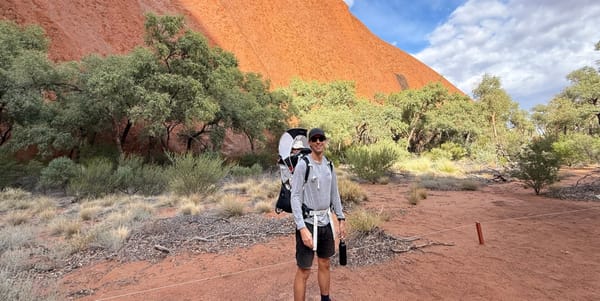
Ep.3 - Indulging some interests during parental leave

My distribution of time during parental leave can be split into:
👨🍼 On duty: baby awake
😴 Off duty: baby napping or at childcare
A lot of my off-duty time has been spent running the house and managing life admin, but I've also used a fair amount of downtime to explore new topics. A part of this has been driven by watching more YouTube. Tech reviews, car reviews, car restoration, personal finance, tech, longevity, regenerative agriculture, watch restoration, AI, raw denim, wine, hot sauce, taxing the rich - the list goes on. Some of it is informative, some of it is just entertaining, but either way, it has exposed me to a couple of the topics I'll cover below.
💪🏽 The Yard and Hyrox
I always like to have some sort of athletic event on the calendar to work towards and keep me motivated. Over the last few years, this has usually involved cycling, but primary parenting duties quickly made morning bike rides difficult to fit in. Fearing that the dad bod might take hold, a new pursuit was needed. With some encouragement from Elly, I joined one of the latest cult-like gyms nearby, called 'The Yard', which hosts regular 50-minute 'Rig' (weightlifting) and 'Turf' (HIIT) sessions. Thankfully, as mentioned in my previous blog, they also provided childcare during their morning session, meaning Bella could be looked after during my guilt-free workout.
A side note here is that I find it interesting how all of these new gym franchises need some sort of 'new' angle on training - F45 with their 45-minute circuits, CrossFit with their WODs, Anytime Fitness open 24/7 so you can run on a treadmill at 2 am (why would you do this?). The Yard is sort of like a watered-down CrossFit: no technical gymnastic movements and risky lifts like overhead squats, but still providing quite structured, challenging training with a background of high-decibel playlists... anyway, I digress.
I joined The Yard and was quickly indoctrinated into the punishing world of HIIT training and endless efforts on their many pain machines called Ergs. At least I was familiar with the rowing machine.
It wasn't long until I started to hear about another cult-like phenomenon called Hyrox, which sounds cool until you find out it stands for Hybrid Rockstar - I wish I was joking. Despite this, it actually looked like a good challenge: a series of functional fitness stations split up by 1km runs. 8km running and 8 stations total, finishing with a brutal 100 wall balls. A lot of other people must agree, because it is apparently the fastest-growing sport on the planet.
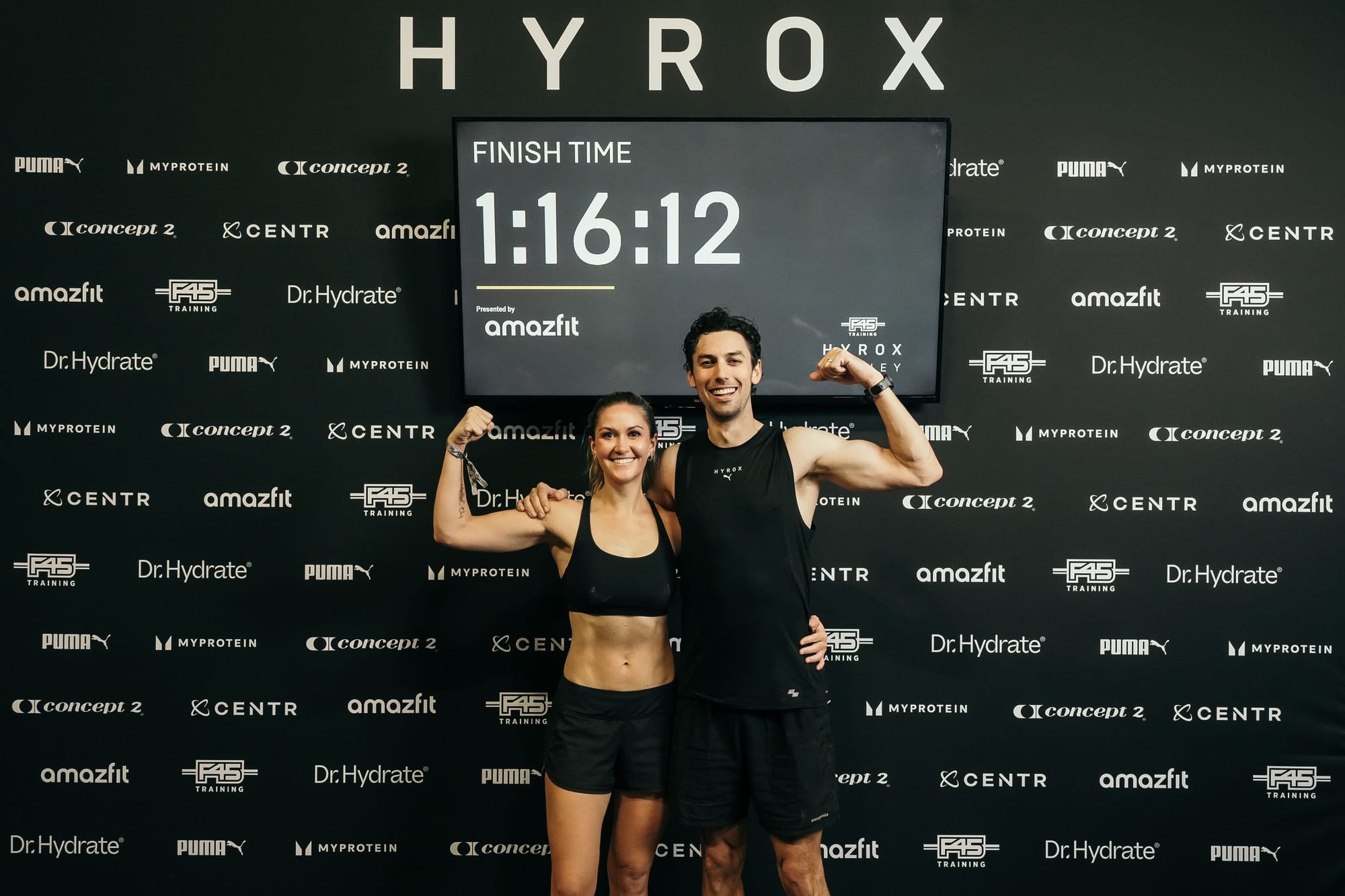
It turns out that The Yard's training is well-suited to preparing you for such an event, so Elly and I signed up for the mixed doubles category and got training. We also binged a series called Beyond the ROX to get our heads around what we’d signed up for.
The event itself was great, and doubly impressive seeing Elly compete just 9 months postpartum. The Sydney event had 21,000 participants over 4 days, a global record, so the atmosphere was phenomenal.
During my 6 months of parental leave, I've done 98 HIIT/weight training sessions (diligently tracked on Strava), which has definitely helped me get stronger, while breaking up many weekday mornings with Bella.
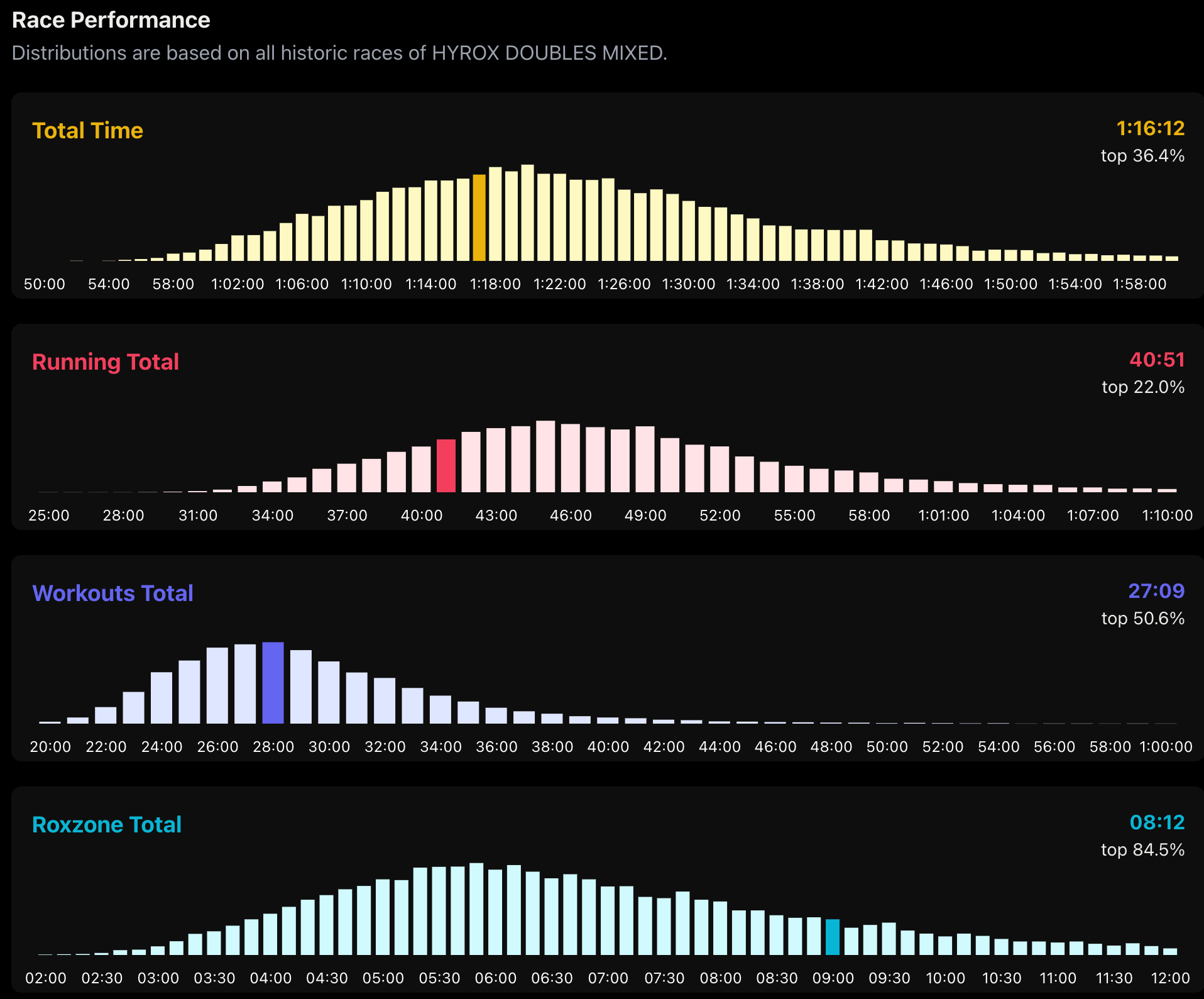
The next challenge will be keeping up my training when I return to work - I suspect my alarm clock is going to get set a lot earlier. I'd quite like to give the Singles Men's Open Hyrox category a go, but that's a topic for another day.
🦶🏼Embracing barefoot/minimalist shoes
This is definitely one I can attribute to having watched a specific YouTube video:
I first came across the host, Peter Attia when he featured in Chris Hemsworth's series about longevity, Limitless, where he guides Chris through various challenges focused on living a longer, healthier life.
In this episode, he speaks with Courtney Conley, an expert on gait (as in, how you walk and run). She talks about how the measurement of toe strength is one of the greatest predictors of fall risk in the elderly. From a longevity perspective, this is important because as you get older, the mortality rates from having a fall increase.
So the question is - what sort of things can you do to increase toe and foot strength? Courtney references an interesting study that compares the benefits of wearing minimalist shoes to doing dedicated foot strengthening exercises. Over 8 weeks, the study found that there were "significant group-time interactions for all muscle size and strength measurements", meaning that compared to the control group, both the minimalist shoe-wearing and foot-strengthening groups showed solid strength improvements. The study concluded that "minimalist shoe walking is as effective as foot strengthening exercises in increasing foot muscle size and strength."
This caught my attention - simply switching to minimalist footwear can build foot strength as much as a dedicated exercise program. I started to look more into minimalist footwear and found out that they're essentially shoes with:
- Zero drop in height between the heel and the front of the shoe to mimic being barefoot
- Wide toe box to let your toes splay for greater stability
- Low to the ground for better balance
- Lightweight and flexible to let your feet move and bend more naturally
Doing some more research, I found that a few companies are offering these sorts of shoes, such as Xero Shoes and Vivobarefoot. Thankfully, they also looked quite 'normal' rather than the weird individual toe shoes I've sometimes seen people wear (which I'd never want to be seen in).
I figured my transition would need to be gradual, to help prevent injuring myself by suddenly placing a lot of strain on my feet. I took a trip to the Xero store in Sydney, tried some on, and ended up picking up some casual black 'Glenn' shoes, and a sporty-looking, HIIT-focused pair of 360ºs that I could wear at the gym. I hadn't realised they were having an EoFY sale, which was a bonus too.
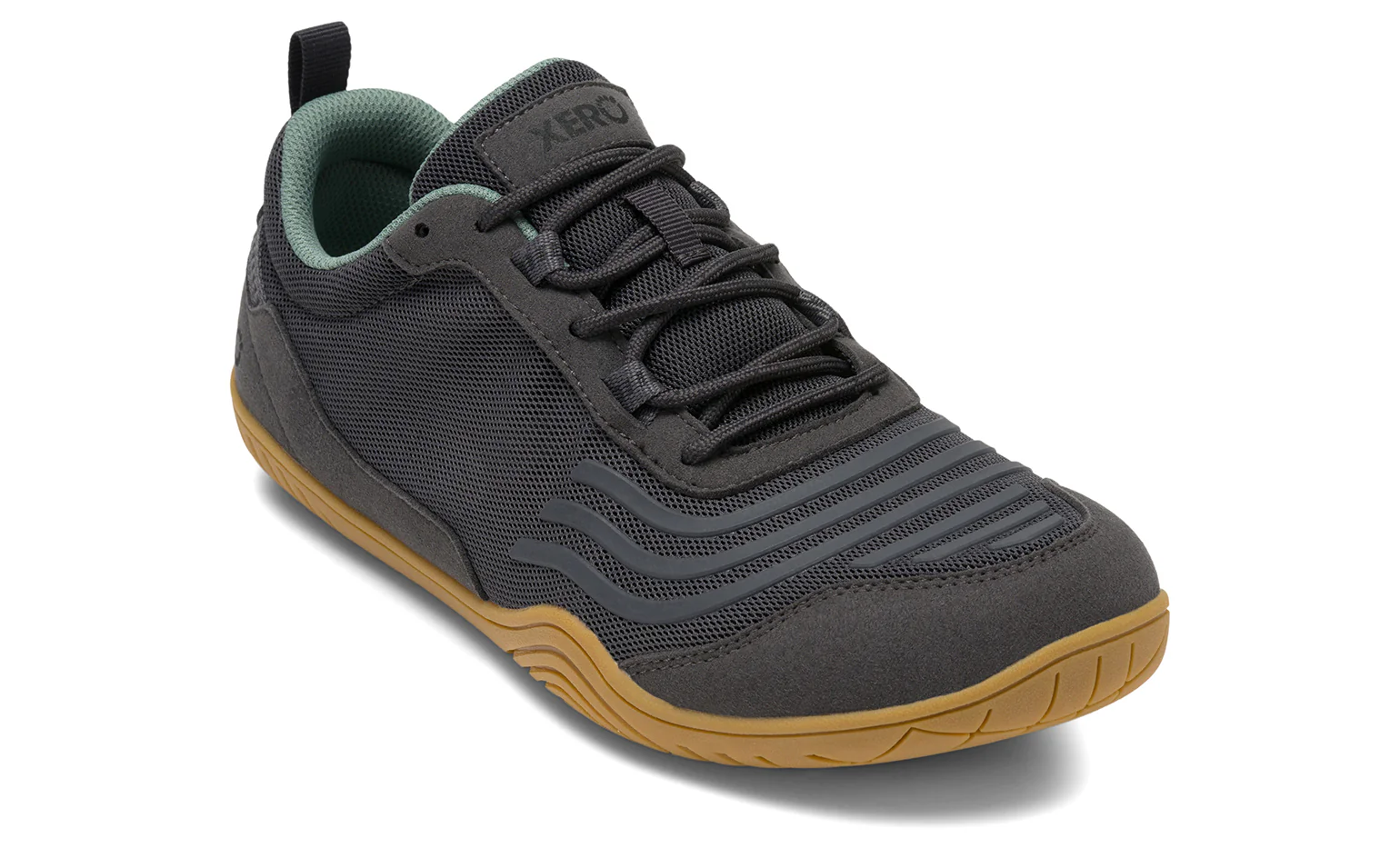
I walked out of the store wearing the Glenns, and it felt different right away - I could feel the cracks in the pavement through the sole, my toes weren't getting squished, and my foot felt quite 'flat' on the ground. Out of interest, I looked up my Hoka Clifton running shoes and found that their heel-to-toe drop is 8mm - quite a difference.
I've now been wearing the casual Glenns and the 360º gym shoes for about 3 months, and I'm really liking them. I assume my foot strength has increased as a result, but haven't really verified this. I notice the difference with the minimalist shoes the most when I go back to more traditional shoes. I did the Sydney Harbour 10km in my heavily cushioned Hokas, and my little toe was pretty beaten up by the end. When I wear my trusty RMW boots, my feet also feel quite constricted by the chisel toe shape.
My next step is giving some minimalist running shoes a go - I've ordered Xero's HFS II, but have read that you need to carefully ramp your distance and be careful not to "heel strike" in the same way that cushioned shoes allow you to do.
Overall, I would recommend giving minimalist shoes a go - I've enjoyed the change so far and like the idea that my feet are getting stronger and more likely to keep me upright with each step.
So, there you go - a couple of areas I’ve spent time thinking about and participating in over the last 6 months. I’ve only scratched the surface though, so I think I’ll need to do a write up about some other topics at a later date!